Start here
Is the kabuki dance performance in Kyoto worth it? how much weight a 5.0 from 17 reviews carries
A two-hour temple session with matcha, a talk on kabuki and two or three dances, weighed up in plain terms: who it suits, who it does not and what to settle before booking.
Reserve a place ↗Quick answer
Yes for most curious visitors, with two conditions: you should want to watch classical dance closely, and you should be happy with a small seated session instead of a full kabuki play. The booking page shows 5.0 stars from 17 reviews, which is a promising score from a small sample, and reviewers single out the clear English explanations. The format is a spoken introduction, matcha and Japanese sweets, then two or three dances by a professional dancer at Saisyu-ji Temple. If you want sets, swordplay and a three-hour story, look at a theatre programme instead; if you want to understand what the dancer is doing with the fan, this is a good fit.
The session at a glance
| Kabuki dance at Saisyu-ji Temple | |
|---|---|
| Run by | A Kyoto cultural exchange association, says the booking page |
| Length | Two hours |
| Setting | Saisyu-ji Temple, a 10 to 15 minute walk from Kyoto Station and Gojo subway station, per the booking page |
| First half | Matcha, Japanese sweets and an introduction to kabuki and buyō |
| Second half | Two or three dances by a professional dancer, with fan work and storytelling through movement |
| Ending | Photos with the dancer |
| Rating shown | 5.0 from 17 reviews on 19 November 2026 |
| Cancellation | Free cancellation and delayed payment, per the booking page |
| Dress | Sleeveless tops are not allowed in the temple |
| Format | Small and seated; a dance performance, not a full kabuki play |
The decision, then the detail
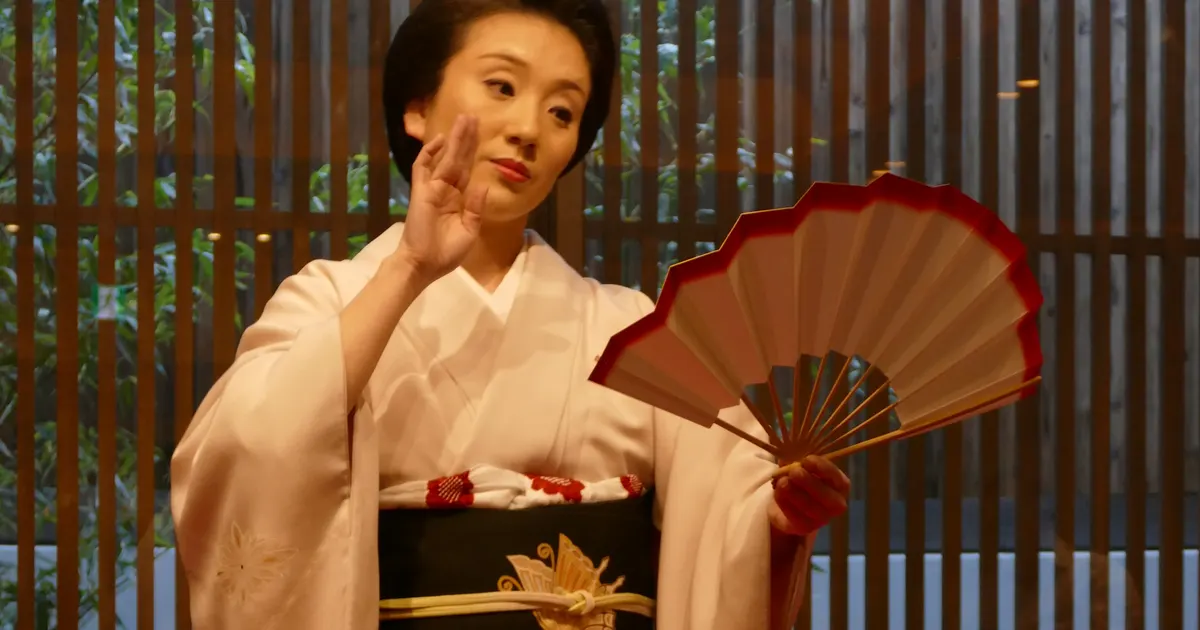
Go if the idea of watching a trained dancer handle a folding fan, a long kimono sleeve and a pause appeals to you, and if you like learning what you are looking at while you look. The session is built around that idea. It opens with tea and sweets, moves into a short spoken history of kabuki and of buyō, the Japanese word for dance, and ends with the dances themselves. Reviewers on the booking page praise the English explanations, which is the single most important detail for a first-time visitor, because dance in this tradition is full of conventions that are invisible until someone points them out. A raised hand can be a door. A fan held low can be a cup. A slow turn can be the passing of a season. Knowing that turns two or three dances from pretty into legible.
What the booking page actually promises
The page describes a session run by a Kyoto cultural exchange association at Saisyu-ji Temple. You are given matcha and Japanese sweets, introduced to kabuki and to traditional Japanese dance, and shown two or three dances by a professional dancer who uses fans and storytelling through movement. At the end there are photos with the dancer. The listing gives the length as two hours, shows free cancellation, and lets you pay afterwards. It also places the temple a 10 to 15 minute walk from Kyoto Station and from Gojo subway station. That is the whole of the promise. The page does not name the dancer, does not publish a programme and does not say how many people attend, so this guide does not either. If a detail matters to you, the calendar and the e-mail after booking settle it.
What a 5.0 can and cannot tell you
A perfect rating from 17 reviews is a good sign and a thin one. It tells you that the people who have gone, and who took the trouble to write, were pleased; it cannot tell you how the session behaves across seasons, dancers and group sizes, because there are not yet enough reviews to show a spread. Compare it with a listing carrying thousands of reviews, where a 4.7 is stable and well tested. Here the sensible reading is that early guests were delighted, the English explanations worked for them, and the session is young. Anyone who treats a score this small as a guarantee is asking it to do too much. Anyone who dismisses it is ignoring that every review is positive and that the praise is specific.
Why a dance session instead of a play
Kabuki on a big stage is a long, elaborate affair. Wikipedia describes a theatre art with heavily stylised acting, glamorous costume and kumadori make-up, and the Minami-za in Kyoto, the city's historic kabuki theatre, is a large house with a revolving stage and a raised runway through the audience. A play like that rewards patience and, for many visitors, a headset or some preparation. A dance session is the opposite scale. It takes the part of the tradition that needs no plot, the dance, and shows it in a small room where you can watch the hands and the fan from close by. That is why the two do not compete so much as answer different questions. One is a night at the theatre. The other is a lesson that happens to end in a recital.
The setting and the walk
Saisyu-ji Temple is a working temple hall, and the session takes its manners from the building. The booking page notes that sleeveless tops are not allowed, so wear sleeves or carry a light layer. If you are asked to take your shoes off, socks are a good idea. The walk from Kyoto Station or Gojo station, which the booking page gives as 10 to 15 minutes, is worth doing in daylight once so that you are not hunting for a temple gate on the evening of a performance. The e-mail you get after booking gives the meeting details; follow those in preference to a map pin.
What you will actually see
Two or three dances, says the booking page. The performer is a professional, and the dances show fan work and storytelling through movement, which is exactly what Kyoto Travel says nihon-buyō does: it conveys romance, seasons or legends through body movement and a fan. Wikipedia lists three ingredients to watch for. Mai is the slow, ritual kind of movement. Odori is the lively, rhythmic kind. Furi is mime drawn from everyday life, like composing a letter or pouring a drink. The introduction on the day is likely to touch on these ideas, and you can watch for them yourself: the stillness, the stamp and turn, and the small gesture that stands for an object.
Where it fits in a Kyoto trip
Two hours is a comfortable length. It sits well on the day you arrive in Kyoto, when you want something gentle near the station, or on the evening after a long day of temples, when your feet want a seat. It also pairs naturally with the history of the city. Kabuki is thought to have begun here, with Izumo no Okuni dancing on the dry bed of the Kamo River around 1603, and the temple hour is a good primer before you walk past the river or the Minami-za. If you are building a longer Kyoto programme, the same city offers a Gion walk, a gold-repair craft workshop and a sake brewery visit on the booking site, each described from its own title and summary.
Who this is not for
Spectacle seekers should look elsewhere: this is a recital in a temple hall, without sets, orchestra or plot. It is not for anyone who cannot sit for two hours, or who is uncomfortable following temple manners. It is not a good choice if you need a long evening meal as part of the outing, because the booking page lists only matcha and Japanese sweets. Last-minute planners may find a small session already full. For all of these people another Kyoto outing will serve better, and this page lists a few of them lower down.
How to book without regret
Open the calendar, choose a date with a margin on either side, and read the cancellation line in the confirmation. The listing shows free cancellation and a pay-later choice, so there is little risk in holding a place early. Reread the meeting details the day before. Dress for the temple. Arrive a little early for tea, because the matcha and sweets are the gentle start the whole session is built on. Keep your phone away while the dancer works, in the same spirit you would in a theatre. If you have a favourite part of a performance, it is probably the small, still moment when a fan closes, and you will see more of those from a close seat than from a back row.
Frequently asked questions
Is it worth it?
Largely yes, for guests who enjoy dance with a commentary: 5.0 stars from 17 reviews on the booking page, with praise for the English. The sample is small.
Is it a full kabuki play?
No. It is an introduction to kabuki and buyō followed by two or three dances.
Do I need to know Japanese?
No. Reviewers praise the clear English explanations, and the dance itself is visual.
What should I wear?
Wear sleeves: sleeveless tops are not allowed in the temple.
What about cancelling?
The booking page shows free cancellation plus a pay-later choice.
Sources