The theatre
The Minami-za and seeing a full kabuki programme in Kyoto
Kyoto's historic kabuki theatre, what makes its stage special and how a temple dance session differs from a night at the theatre.
Reserve a place ↗Quick answer
The Minami-za is Kyoto's main kabuki theatre. Wikipedia says it was founded in 1610 as the Shijō Minami-za, and that the present building dates from 1929 with 1,086 seats. A temple dance session and a theatre programme answer different questions: the first explains and shows dance in a small room, the second gives you the full spectacle.
The Minami-za in brief
| What the sources say | |
|---|---|
| Founded | 1610, as the Shijō Minami-za |
| Present building | 1929, in the Momoyama style, with 1,086 seats |
| Interior | Refurbished in 1991 with modern stage machinery |
| Status | Registered as a Japanese Tangible Cultural Property in 1996 |
| Stage features | Hanamichi, seri trap-door and revolving stage |
| Tickets | Sold at the box office or online through Shochiku, per Inside Kyoto |
The last of seven
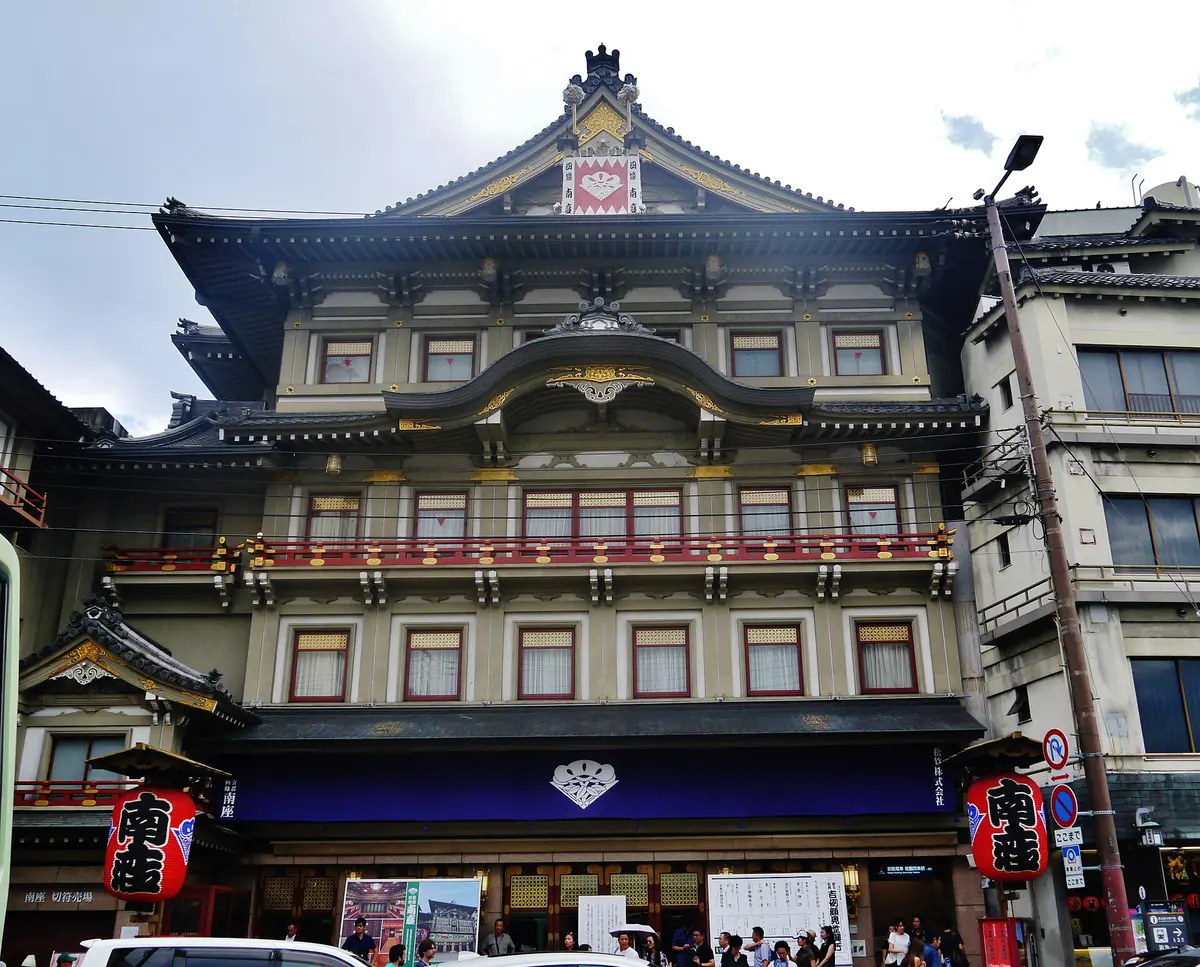
Wikipedia says the Minami-za is one of the earliest of seven licensed kabuki theatres built in the Shijō Kawara area in the early Edo period, and that it pre-dates those of Tokyo and Osaka. Inside Kyoto says seven kabuki theatres once stood in Kyoto and that the Minami-za is the only one still standing. Inside Kyoto calls it rightly regarded as the birthplace of kabuki, and it stands close to the riverbed where Okuni is thought to have performed. The theatre therefore sits at the centre of the story that the temple session tells in miniature.
The building
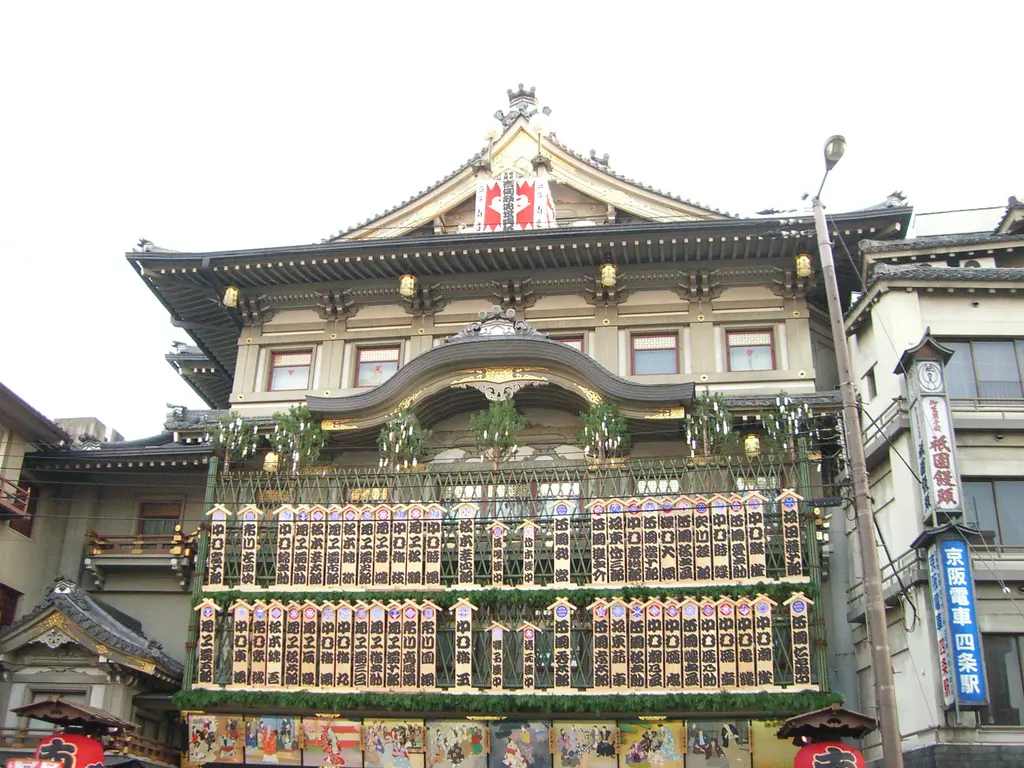
The present building was completed in 1929 in the architectural style of the Momoyama period, with a gabled roof and a traditional turret marking the government approval to stage kabuki, according to Wikipedia. The capacity is 1,086 seats. The interior was drastically refurbished in 1991 and modern stage machinery was installed, and in 1996 the theatre was registered as a Japanese Tangible Cultural Property because of its architectural value. The photograph below shows the theatre on the day of Kaomise in 2007.
Stage machinery
The theatre has stagecraft that was invented in Edo-period playhouses: the hanamichi, a walkway through the audience for entrances and exits, the seri, a trap door at its end, and the mawari-butai, a revolving stage. That machinery is why a full kabuki play feels so different from a dance recital. Entrances can be slow and dramatic along the walkway, and scenes can change as the stage turns. None of that is present in a temple hall, where the dancer works in a single space.
Going to a performance
Inside Kyoto reports that matinee and afternoon shows each ran about three hours when the author visited, and that the morning show included three stories. Tickets could be bought at the box office or online through Shochiku\'s kabuki website, and prices ranged with distance from the stage. Only Japanese-language audio headsets were available during the visit, and photography was not allowed. Because programmes and ticketing change, check the theatre operator's own pages before planning, and do not rely on a blog from a past year.
Which should you see?
If you have one evening and a taste for spectacle, go to a theatre programme when one is running. If you want an introduction, a close view and no need to follow a long plot in Japanese, the temple session is better. A visitor with time can do both and the pair complement each other: the dance session gives you vocabulary and the theatre shows how it is used in a full play. This page does not sell theatre tickets; the Minami-za's operator does.
Frequently asked questions
When was the Minami-za built?
Founded in 1610; the current building dates from 1929, according to Wikipedia.
How many seats does it have?
Wikipedia gives a capacity of 1,086.
Can I take photographs inside?
Inside Kyoto says photography is not allowed during performances.
Is the temple dance the same as a theatre show?
No. It is a small seated session with a talk and two or three dances.
Sources